
Desert Lab
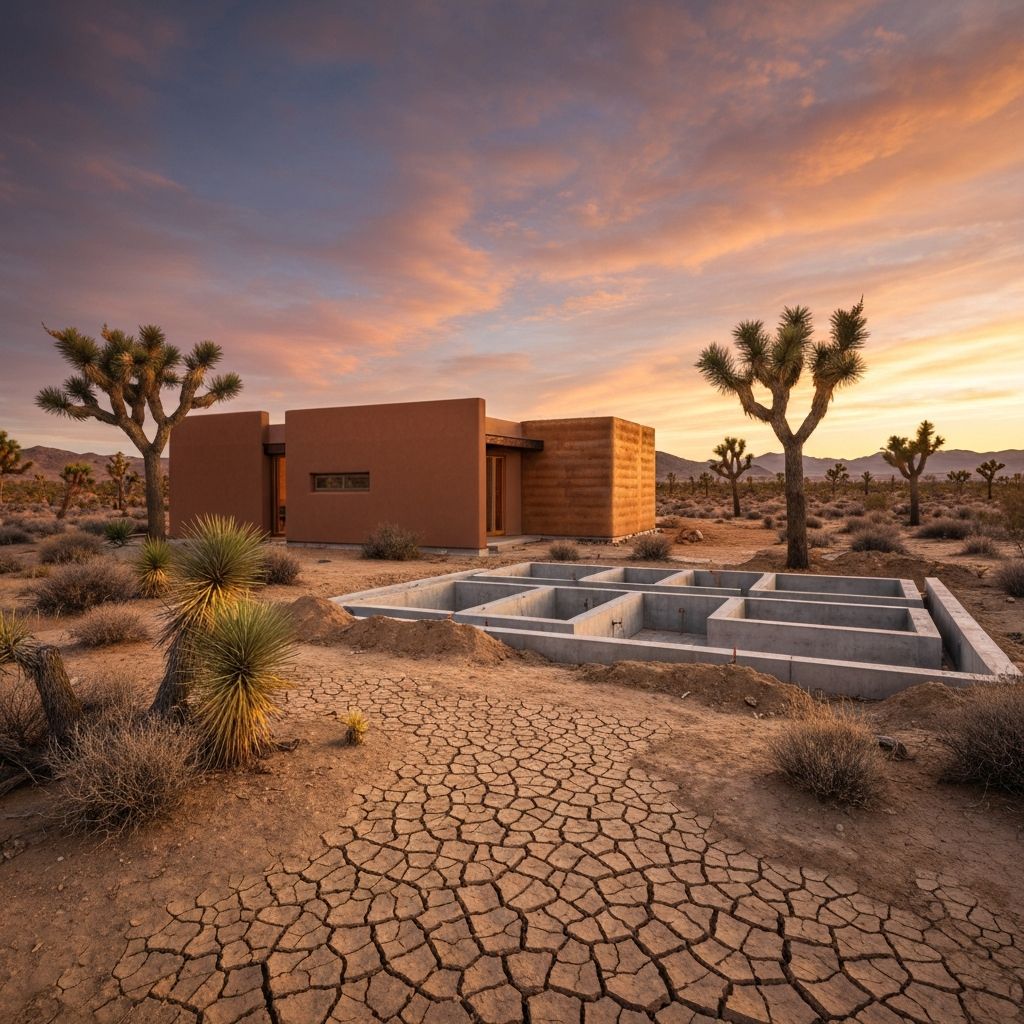
Our desert proving ground for bioconcrete block technology — where bioconcrete is stress-tested against 120-degree summers, flash floods, and sandstorms to prove that digitally fabricated shelter can outperform conventional construction in the harshest conditions on Earth.
3,100PSI
Compressive Strength
14hr
Thermal Lag
80%
Bio-Based Material
127F
Peak Temp Tested
0
Mortar Required
Core Technology
3D-Printed Bio-Concrete, Desert Proven
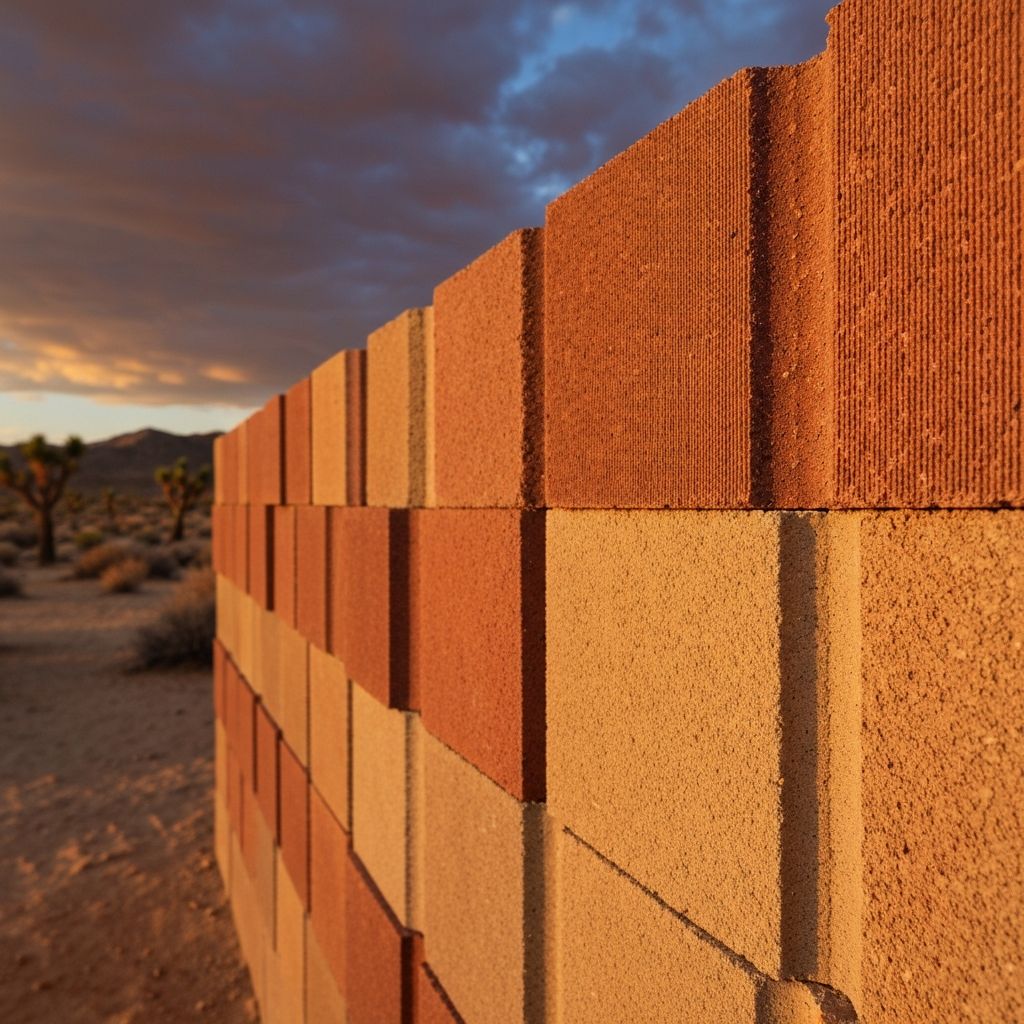
Bio-Blocks are precision-manufactured interlocking building units made from 80% bio-based materials — including recycled construction aggregate, volcanic pumice, and mycelium-stabilized binder. Each block is 3D-printed in 45 minutes, interlocks without mortar, and achieves 3,100 PSI compressive strength. At the Desert Lab, we are proving this technology performs under the most punishing conditions on the continent.
3,100
PSI Strength
80%
Bio-Based
14hr
Thermal Lag
0
Mortar Needed
"We are not competing with concrete. We are replacing it with something the planet can actually afford."
Passive Comfort
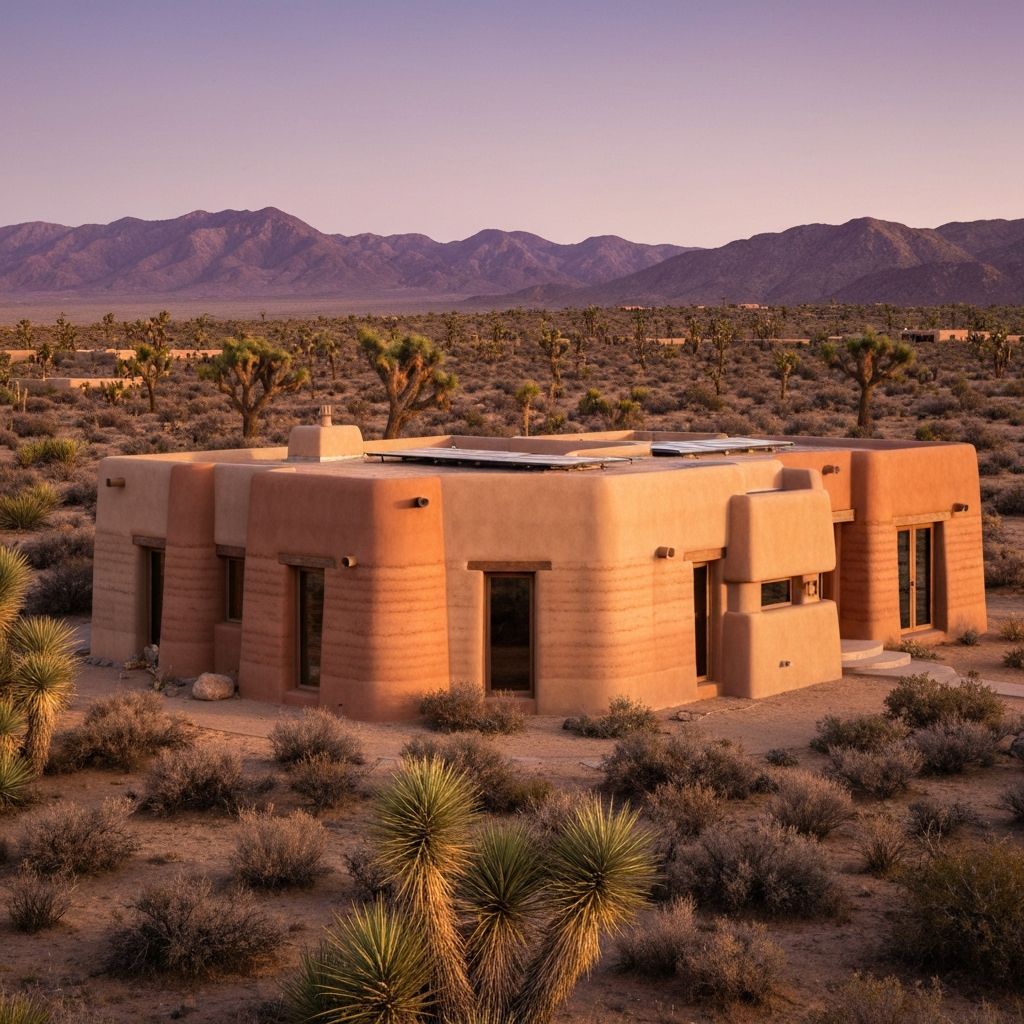
82 Degrees Inside When It Is 120 Outside
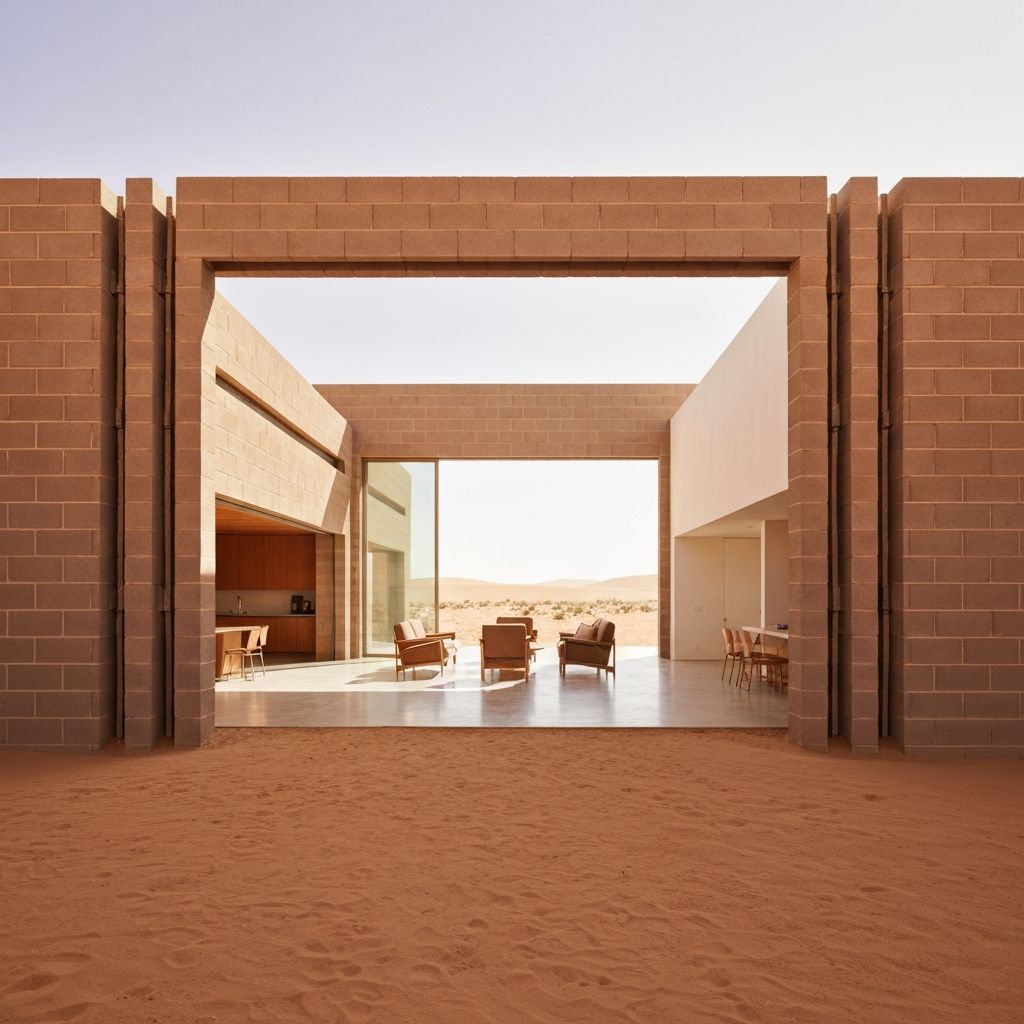
Bio-Block walls act as a thermal battery. The 12-inch interlocking wall assembly absorbs daytime heat and releases it 14 hours later — maintaining interior temperatures within a 12-degree comfort band year-round, without any mechanical heating or cooling. Compared to standard CMU block construction, Bio-Blocks reduce peak interior temperature by 18 degrees and cooling energy demand by 94%.
Growing in the Desert
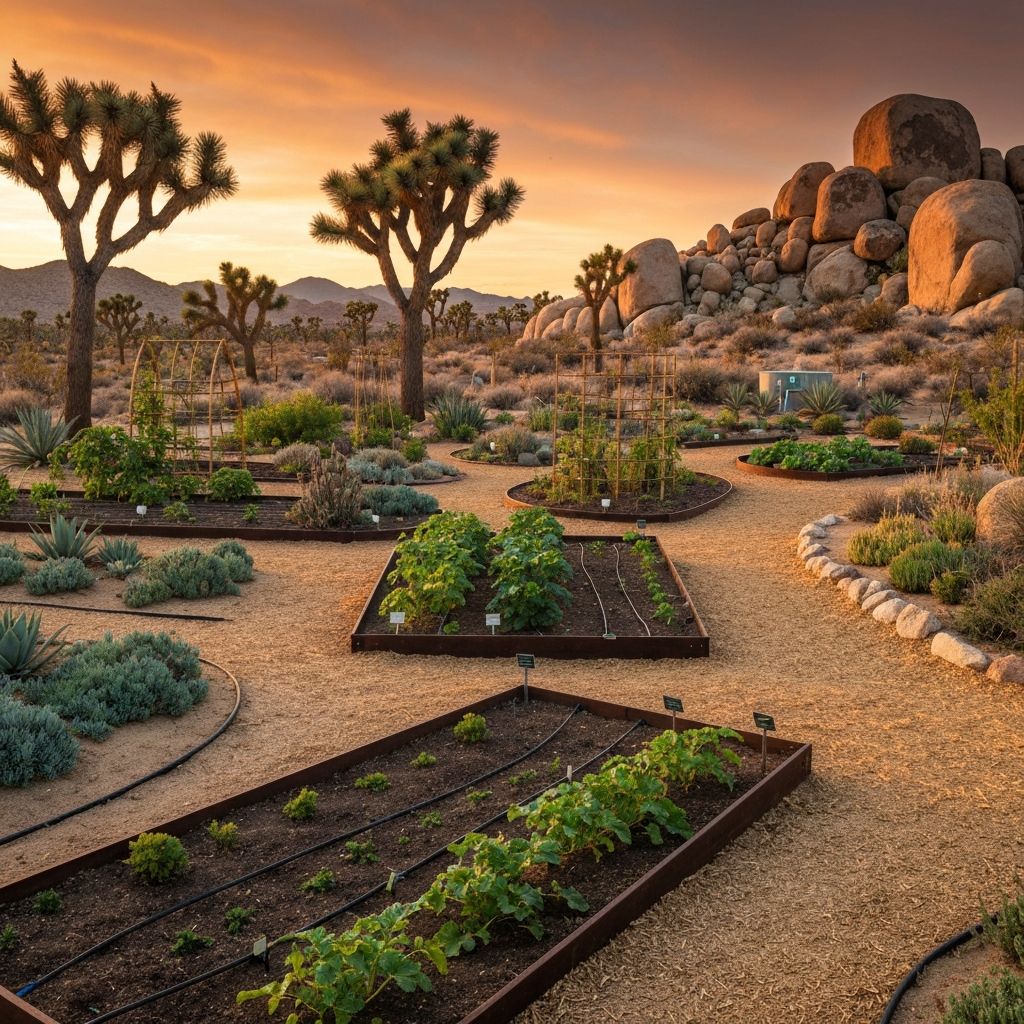
3.9 Inches of Rain, 365 Days of Food
Bio-Block wall geometry includes integrated greywater channels that route building runoff directly to drip irrigation. Combined with the shade microclimates created by Bio-Block structures, our desert permaculture program proves you can grow meaningful food yields even in one of the driest ecosystems in North America — using the building itself as the water harvesting infrastructure.
- Integrated greywater channels in block geometry
- 85% water recapture from building envelope
- 24 drought-adapted food species in trial
- Bio-Block shade structures create 15F cooler microclimates
"The desert does not forgive bad engineering. That is exactly why we test here."
Performance Data
Bioconcrete Block Thermal Performance
Our 12-inch bioconcrete block walls demonstrate a 14-hour thermal lag, maintaining interior temperatures within a 12-degree comfort band while outside temperatures swing over 55 degrees. Compared to conventional concrete block, bioconcrete blocks reduce peak interior temperature by 18 degrees.
120F
Peak Outside
82F
Peak Inside (Bioconcrete Block)
100F
Peak Inside (CMU)
38F
Bio-Block Delta
Fabrication Pipeline
From Digital File to Standing Wall
The Bio-Block fabrication process from mix design to finished structure. Every step is optimized for desert conditions and off-grid deployment.
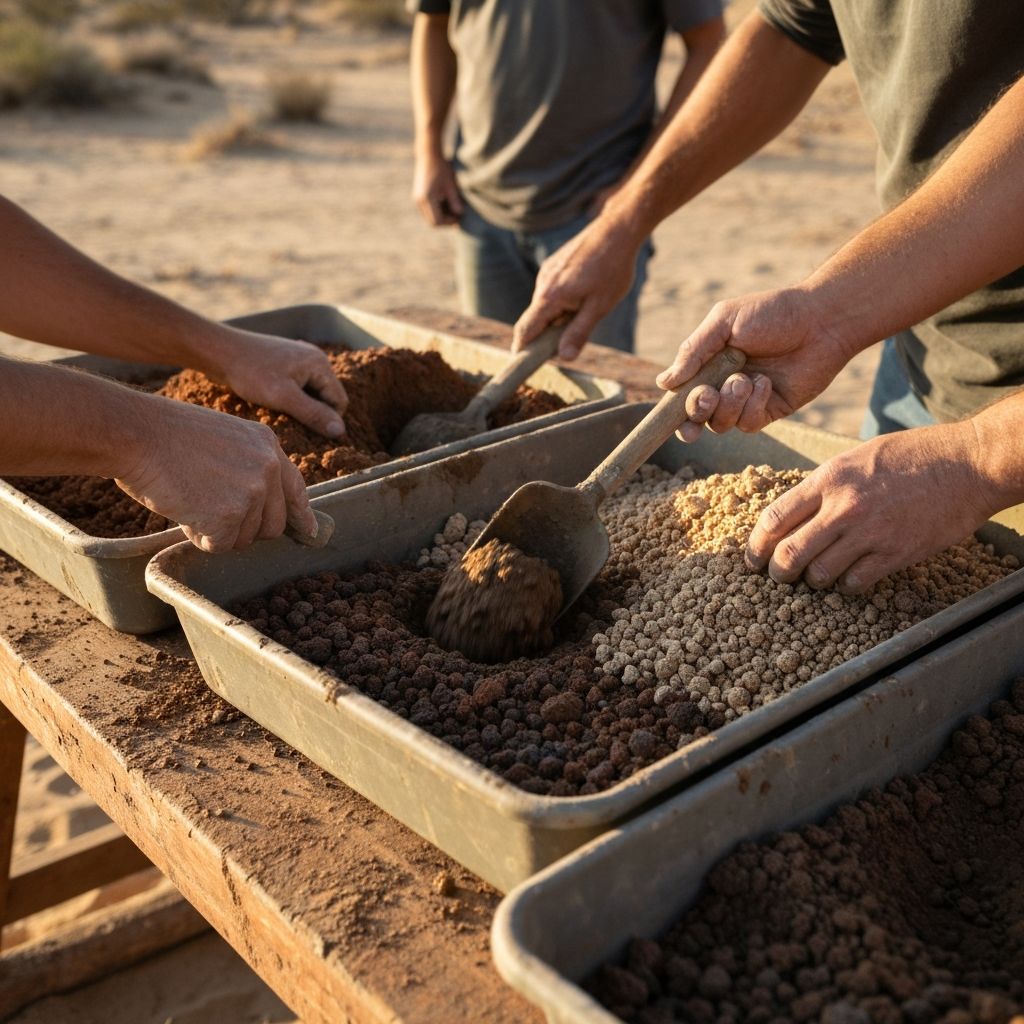
Mix Design & Calibration
Each bioconcrete block begins with a custom bioconcrete mix: 60% recycite aggregate from construction waste, 20% volcanic pumice for thermal mass, and 20% mycelium-stabilized binder. The mix is calibrated to local humidity and temperature before every print run to ensure consistent layer adhesion.
3D Printing & Layer Deposition
Our gantry-mounted extruder deposits bioconcrete in 8mm layers at 120mm/s. Each block takes approximately 45 minutes to print. The interlocking geometry — dovetail keys on all four faces — is printed in a single pass with zero post-processing. We print 32 blocks per day on a single machine.
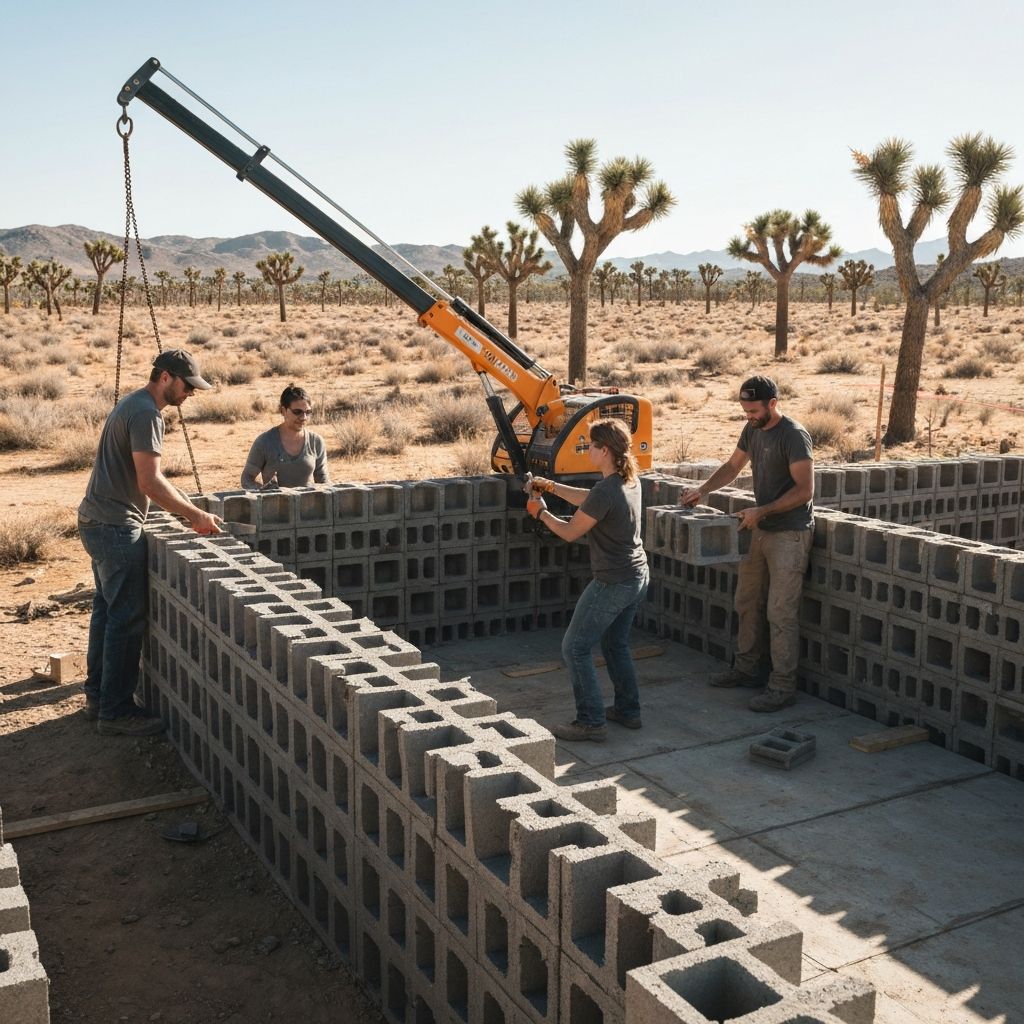
Dry-Stack Assembly
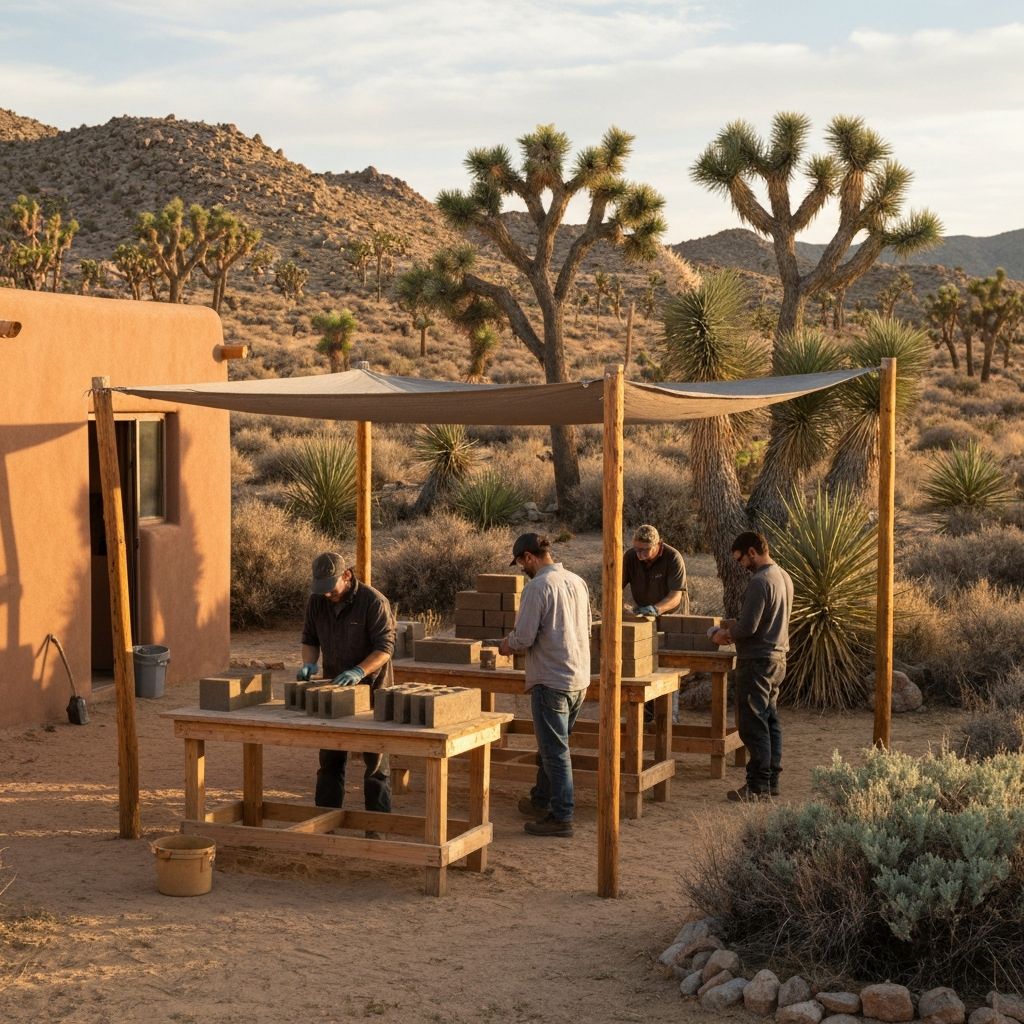
Bioconcrete blocks interlock without mortar. The precision dovetail keys create a continuous thermal bridge-free wall system. Two workers can assemble a 10-foot wall section in under 4 hours. The dry-stack method means walls can be disassembled and blocks reused — a first for concrete construction.
Thermal Curing & Instrumentation
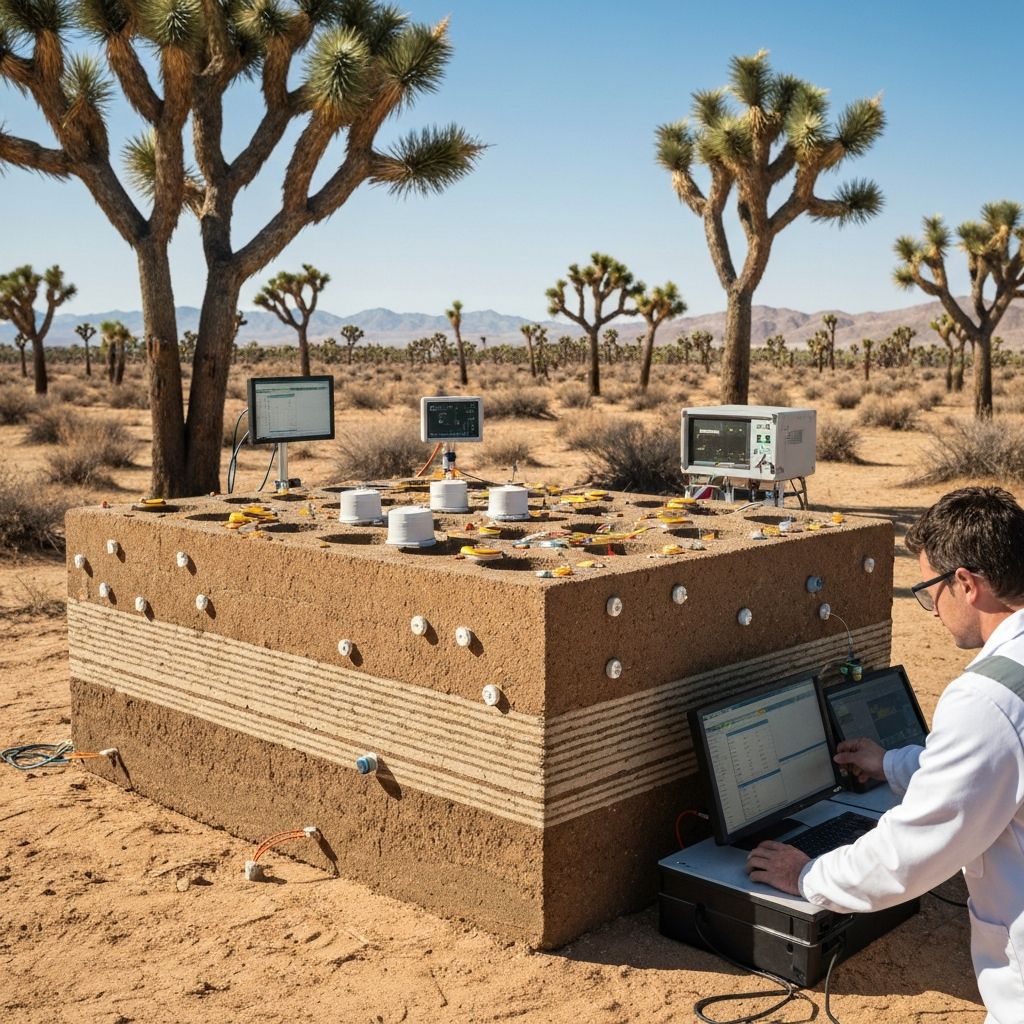
Blocks cure for 14 days in the desert sun, reaching full 3,100 PSI strength. During curing, we embed fiber-optic temperature sensors at 2-inch, 6-inch, and 12-inch depths. Every wall becomes a data-generating research instrument, streaming thermal performance data 24/7.
Solar & Systems Integration
Bioconcrete blocks include integrated conduit channels for electrical, plumbing, and ventilation — printed directly into the block geometry. Solar mounting rails attach to precision-printed anchor points. The result is a fully off-grid building envelope with zero chasing or retrofitting.
Technical Specifications
Bioconcrete Block Data Sheet
Every specification verified through four complete seasonal cycles at our Joshua Tree test site. Data represents average performance across 12 test wall assemblies.
Width
16"
Height
8"
Depth
12"
bioconcrete block v3.2 — Desert Mix
Materials Testing
Bio-Block vs. the Field
Side-by-side testing of five block systems under identical desert conditions. Sustainability Score combines thermal performance, carbon footprint, material sourcing, and reusability.
bioconcrete block (Desert Mix)
3100 PSI
14hr lag
80% bio-based
$18/sqft
-72% vs CMU
Standard CMU Block
1900 PSI
4hr lag
0% bio-based
$14/sqft
Baseline
Insulated Concrete Form
3500 PSI
8hr lag
5% recycled
$28/sqft
+12% vs CMU
Adobe Block (Traditional)
300 PSI
12hr lag
100% local
$6/sqft
-90% vs CMU
Autoclaved Aerated Concrete
900 PSI
6hr lag
30% recycled
$22/sqft
-15% vs CMU
Active Research
Current Programs
Six research programs generating real-world performance data for 3D-printed bio-concrete in extreme desert conditions.
Print Parameter Optimization
Dialing in layer height, extrusion rate, and nozzle temperature for desert ambient conditions. Summer and winter print profiles produce different block densities.
32 blocks/day output
Thermal Lag Testing
Fiber-optic sensors at three depths across 12 test walls stream 24/7 data. Bio-Blocks demonstrate consistent 14-hour thermal lag across all four seasons.
14hr heat retention
Passive Ventilation Channels
Bio-Block geometry includes printed ventilation channels that create stack-effect cooling. Interior temperatures stay 38 degrees below exterior peaks without mechanical systems.
38F temperature delta
Interlocking Geometry R&D
Testing dovetail, tongue-and-groove, and friction-lock geometries for seismic performance. Current v3.2 block withstands simulated 6.5 magnitude lateral loads.
6.5 magnitude rated
Desert Permaculture Integration
Bio-Block walls create shade-structure microclimates for food production. Integrated greywater channels in the block geometry feed drip irrigation directly from the building envelope.
85% water efficiency
Extreme Durability Testing
Exposing Bio-Blocks to 127F peak heat, sandstorms, UV cycling, and flash-freeze events. Four complete seasonal cycles of data show zero structural degradation.
0% degradation at 4yr
Build With Bio-Blocks in the Desert
Our Bio-Block fabrication workshops and extreme-environment research intensives run year-round. Learn to print, assemble, and test the building blocks of off-grid shelter.