
Future
Foundations
From parametric modeling to precise 3D fabrication, we are rewriting the manual on how we build with earth. Explore our latest material science and high performance construction research.
Research
Areas
Sustainable Building Materials
Developing carbon-negative composites using site-sourced earth, mycelium, and bio-polymer binders.
Affordable Housing Design
Architectural systems optimized for rapid deployment, low-cost fabrication, and dignified minimalist living.
Autonomous Robotics
Custom gantry and swarm robotics for precise, autonomous deposition of natural building materials.
Natural Materials Science
Advanced analysis of biochar, rammed earth, and raw minerals to maximize structural performance.
Off-Grid Energy Production
Integrated thermal storage, sand batteries, and micro-grid systems for total site energy autonomy.
Vertical Microfarming
Automated, closed-loop hydroponic and aeroponic systems integrated directly into building envelopes.
Digital-to-Dirt
Pipeline
Our end-to-end workflow collapses the distance between architectural code and physical structural mass.
Computational Design
Parametric modeling defines optimal block geometry for structural performance, thermal mass, and interlocking connection points.
Material Science
Bioconcrete formulation using site-sourced earth, recycled aggregate, natural pozzolans, and proprietary bioite binder.
3D Fabrication
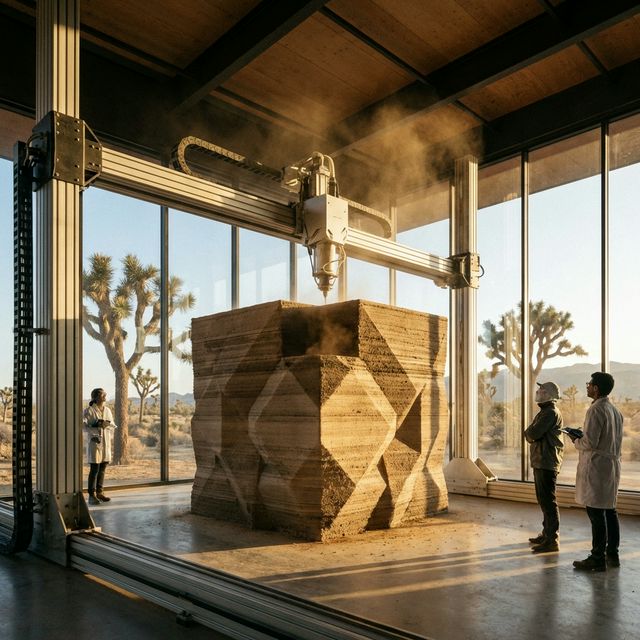
Custom gantry printer deposits bioconcrete in precise layers. Each block prints in 4.2 minutes with continuous material feed.
Field Deployment
Interlocking blocks assemble without mortar. A single structure can be erected by two people in under 72 hours.
Environmental
Equilibrium
Conventional concrete is responsible for 8% of global CO2 emissions. Our bio-based alternatives flip the script, turning every wall into a permanent carbon sink.
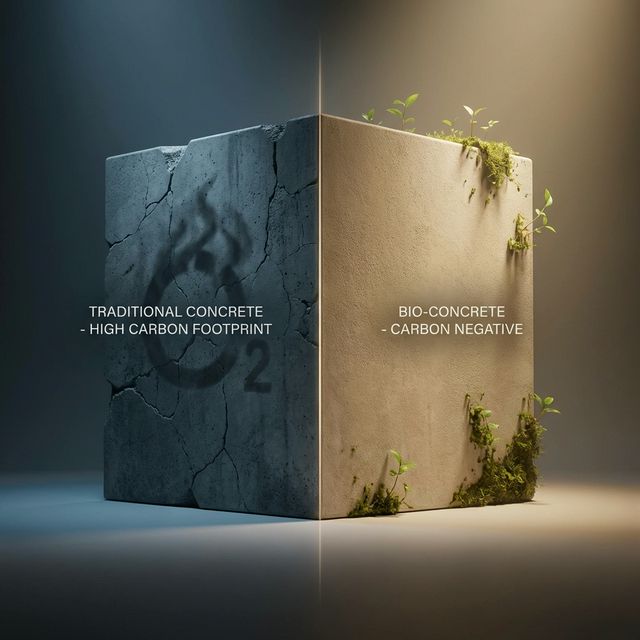
Scientific Visualization v2.4
Molecular binding contrast: Synthetic cement vs Bio-Polymer matrix.
Material Horizons
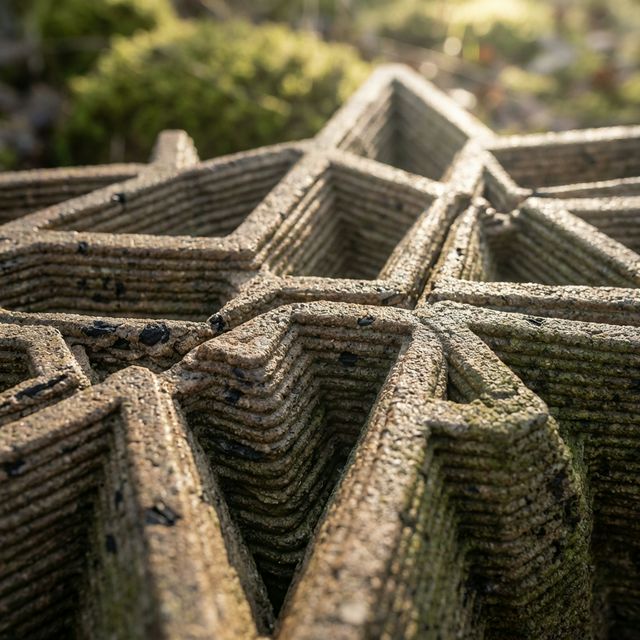
Bioconcrete
Our flagship material. A carbon-negative composite of site-sourced earth, recycled aggregate, and proprietary bioite binder. Achieves 2,800 PSI compressive strength while sequestering 14kg CO2 per unit.
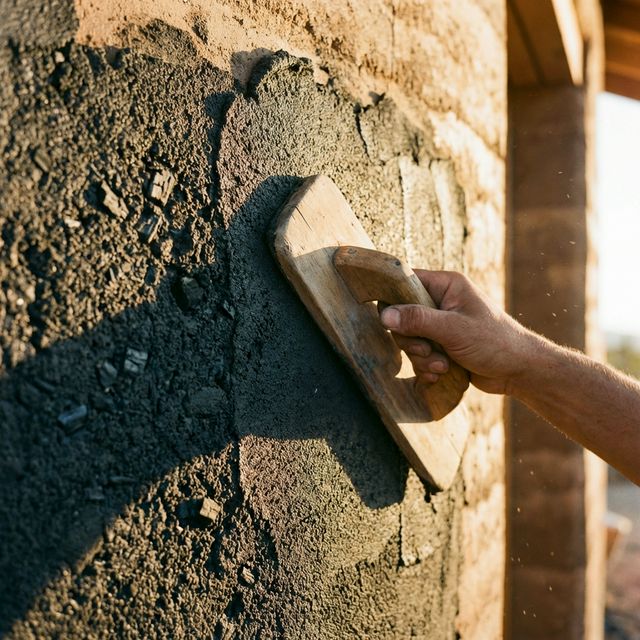
Biochar Plaster
A revolutionary finishing material that turns walls into carbon-scrubbing surfaces. Made from 30% recycled biochar, this plaster is naturally antimicrobial, moisture-wicking, and fire-resistant.
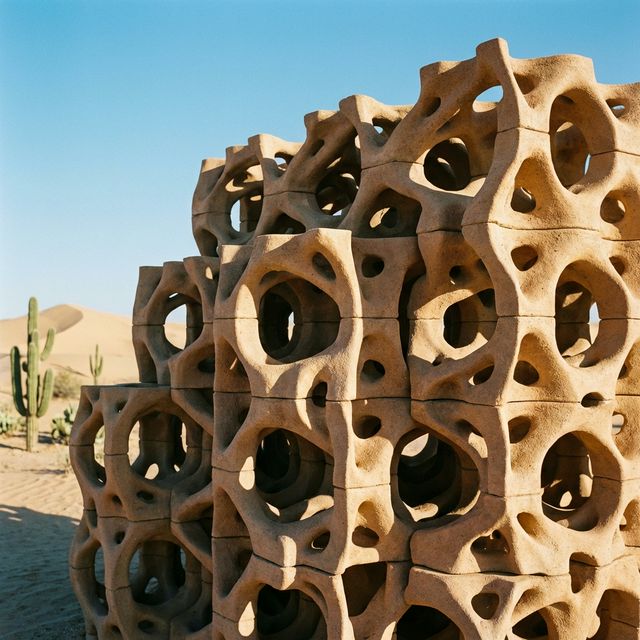
Crystalline bioconcrete blocks
3D-printed interlocking geometries that require zero mortar. The parametic design allows for integrated air-chambers (thermal breaks) and electrical routing directly within the structural unit.
Structural KPIs
Research Partnerships
We are open to corporate R&D partnerships, academic collaborations, and government-funded climate tech research. Help us scale the future of earth-integrated fabrication.