
Robotic Fabrication in Desert Environments
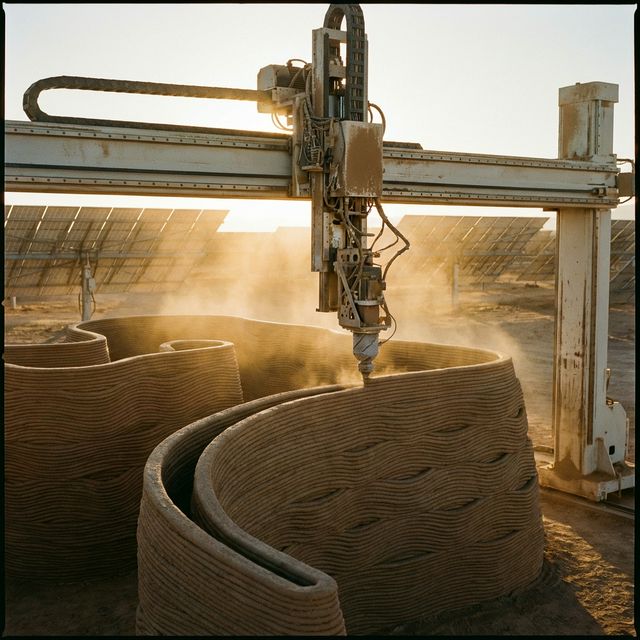
Our latest field tests in the Mojave Desert demonstrate the resilience of 3D-printed bioconcrete structures against extreme heat and sandstorms.
In the heart of the Mojave Desert, where midday temperatures routinely exceed 110°F and wind speeds tear through conventional structures, Off Grid Green is rewriting the manual on shelter. Our latest field deployment of the OGG-1 Mobile Gantry System has validated a crucial hypothesis: that autonomous robotic fabrication is not just a novelty, but a necessity for resilient desert living. By using autonomous machinery, we can build structures without exposing human crews to extreme, life-threatening environmental conditions.
The field deployment focused on two goals: verifying the mechanical reliability of our solar-powered robotic gantry in abrasive, dusty conditions, and proving the thermal performance of our proprietary geopolymer bioconcrete. Building in isolated desert environments requires systems that can adapt to changing wind loads, power limitations, and rapid material curing cycles.
The OGG-1 Mobile Gantry: Solar-Powered Autonomy
Traditional construction in desert regions is labor-intensive and logistically challenging. The OGG-1 Mobile Gantry System bypasses this by operating autonomously on-site. The printer runs continuously, powered entirely by an off-grid 5kW solar array and a battery backup bank. During our 14-day field trial, the system maintained extrusion path accuracy to within +/- 2mm, even during sand gusts exceeding 35 mph.
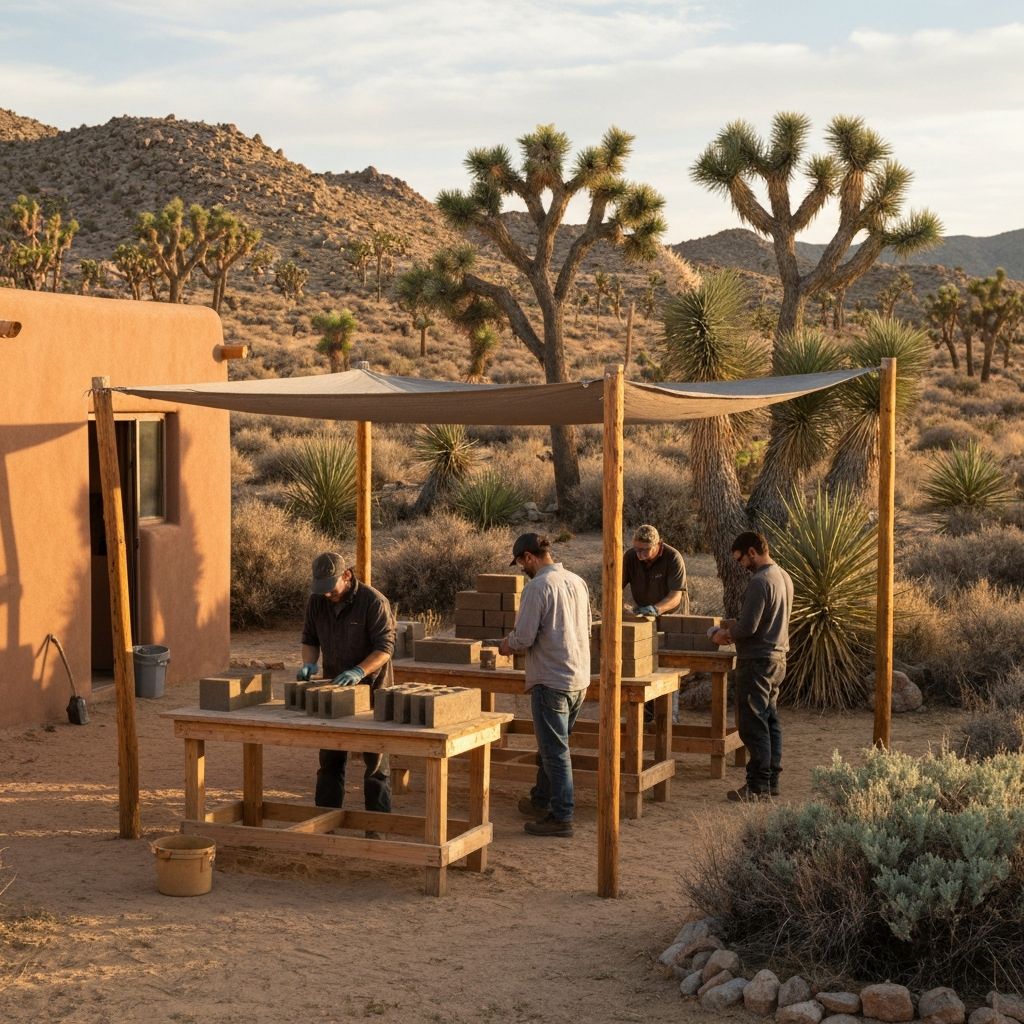
System Power Profile
The OGG-1 runs on a custom 48V DC bus directly integrated with a lithium-iron-phosphate (LFP) battery bank. This design eliminates DC-to-AC inversion losses, enabling the printer and extrusion motors to operate on 15% less energy than standard grid-tied industrial printers.
Material Science: Desert-Mix Bioconcrete
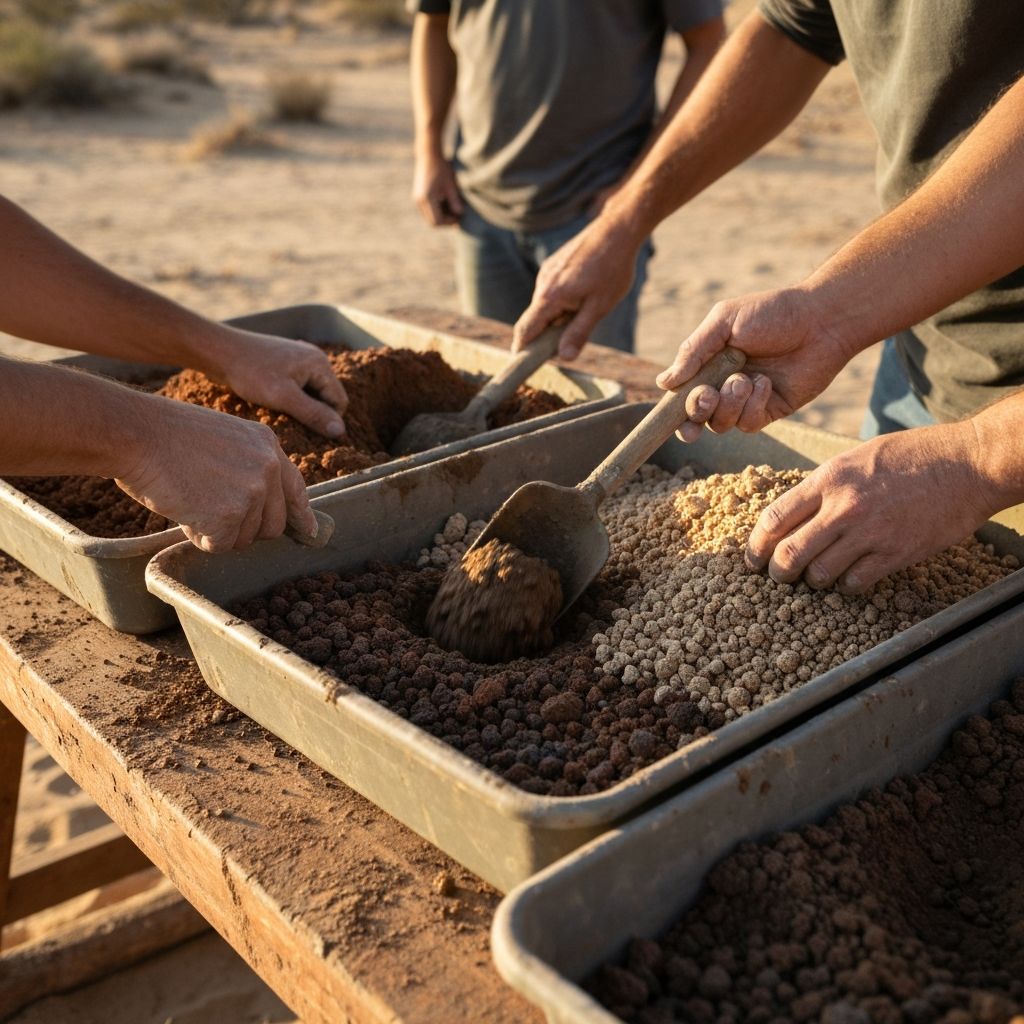
Transporting standard Portland cement into remote desert environments is carbon-intensive and impractical. The OGG bioconcrete mix is a geopolymer system utilizing up to 65% unwashed local dune sand as aggregate, bound by an alkali-activated metakaolin matrix. Chop basalt fibers are mixed in to add tensile strength and prevent shrinkage cracks in the dry desert air.
# Desert-Mix Bioconcrete Formulation (OGG-DM-02)
aggregate:
  type: Desert Dune Sand (unwashed, local)
  grain_size_mm: 0.1 - 0.4
  ratio_dry_weight: 0.65
binder:
  type: Geopolymer (Metakaolin + Sodium Silicate activator)
  ratio_dry_weight: 0.22
reinforcement:
  type: Basalt Fiber (chopped, 12mm length)
  ratio_dry_weight: 0.03
admixtures:
  superplasticizer: Polycarboxylate Ether (PCE)
  retarder: Citric Acid (for setting delay in 100°F+ heat)
properties:
  slump_flow_mm: 180
  setting_time_mins: 45
  compressive_strength_28d_mpa: 42.5
Thermal Dynamics: The Sinusoidal Wall
The true advantage of 3D printing is the ability to fabricate complex geometries. Instead of solid walls, the OGG-1 prints a double-layer wall with a hollow sinusoidal truss pattern. This lattice acts as a passive thermal battery. During the day, heat is absorbed by the exterior layer and slow-moving convective loops inside the hollow cavities. As temperatures drop at night, this stored heat is slowly released inward.
We don't print walls to block the desert heat; we print thermal dampeners that store and release energy, shifting the peak thermal load by exactly 12 hours.
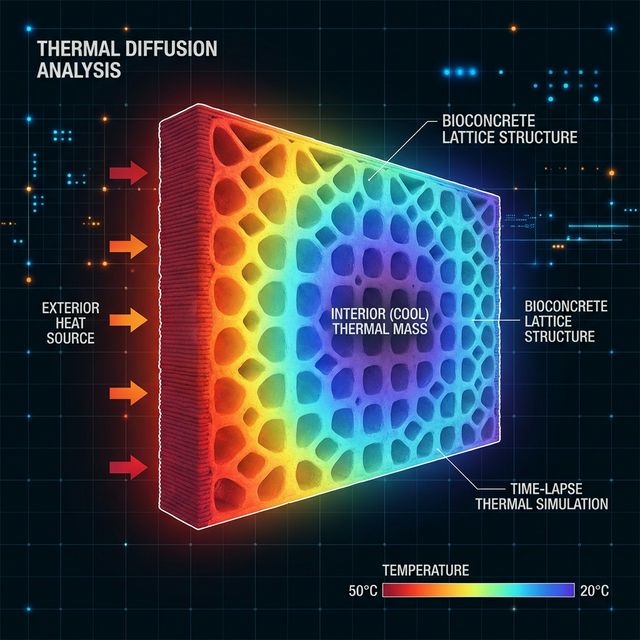
Passive Performance Validation
Sensors embedded within the core of the bioconcrete print recorded a steady interior temperature of 74°F while exterior surfaces baked at 102°F. This passive thermal behavior reduces active HVAC energy needs to zero, making off-grid survival comfortable.
Key In-Field Takeaways
Deploying high-tech fabrication equipment into harsh climates taught our engineering team several critical lessons that are being folded into future system updates:
- Mechanical Wear: Fine desert dust requires pressurized positive-pressure seals on all linear rails and stepper motor housings to prevent abrasive binding.
- Curing Kinetics: High wind speeds and low humidity speed up water evaporation. The outer print skin requires continuous light misting for the first 12 hours of curing to achieve design strength.
- Foundation Stability: Gantries placed directly on sandy soil require wider load-distribution feet and anchor spikes to prevent alignment drift during high-torque print movements.
Author
Alex Rivera
Research Lead, Off Grid Green